


Benefits and Roles of Video Conferencing and All-In-One AI Conference Camera in the Post-COVID Era
Do you use video conferencing platforms and an all-in-one AI conference camera for your business?
Video conferencing allows people in different locations to communicate through video and audio in real time. It helps businesses stay connected without the need for travel.
Today, video conferencing is widely used in remote and hybrid work setups. It helps companies reduce travel expenses, improve teamwork, and support better communication. It also allows participants to see facial expressions and body language during meetings.
In this article, we’ll explore the benefits of video conferencing and why AI conference cameras are important in the post-COVID era.
Check out our previous article on Very Important Communication Tools
In this blog post, we will look at how video conferencing helps organizations cut down on business travel costs, reduce carbon footprint and increase collaboration while also exploring some of the key benefits and roles of video conferencing equipment in the post-COVID era.
The Best Video Conference Camera in the Post-COVID Era
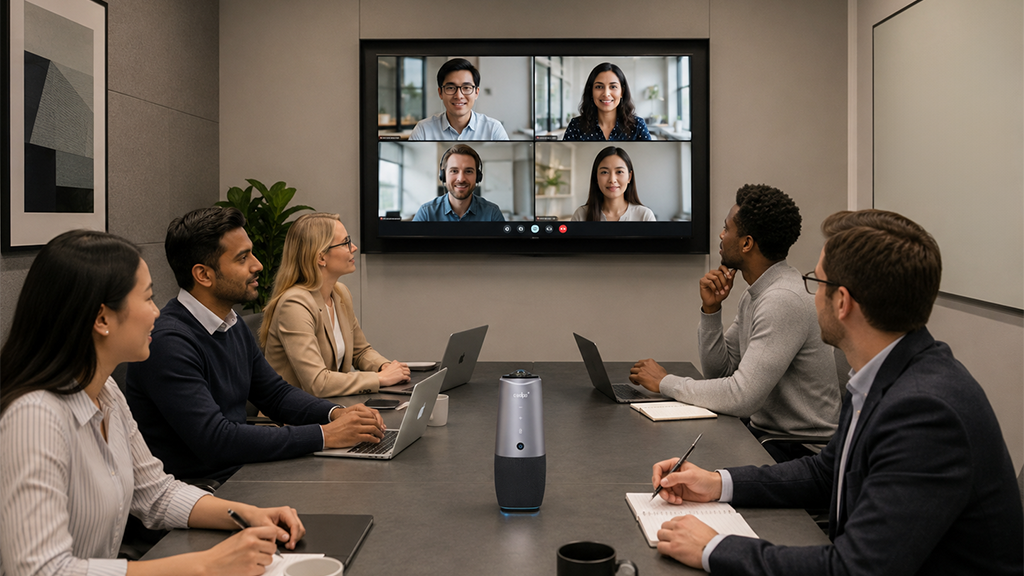
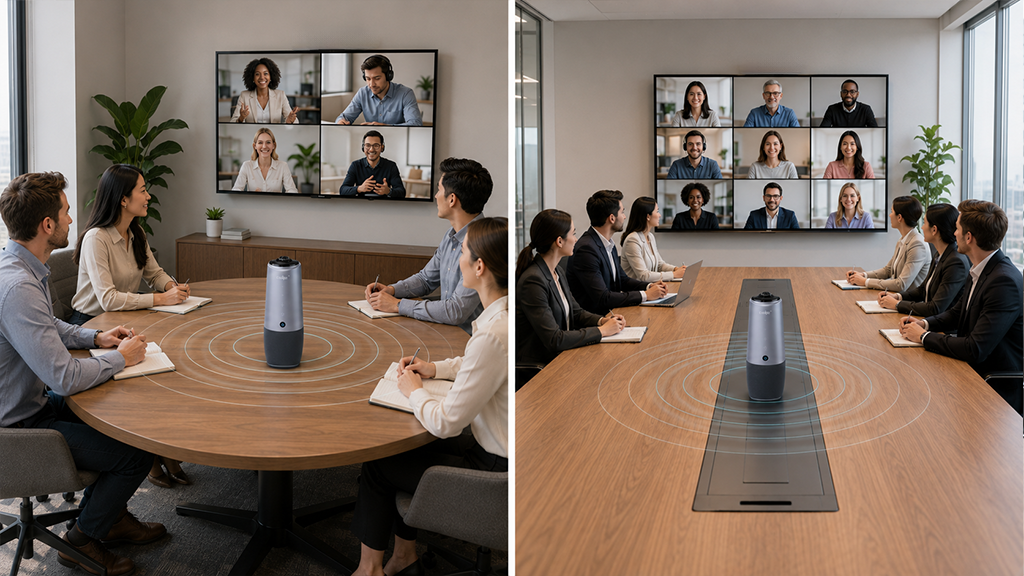
The Coolpo AI Huddle Series — Pana and Mini — are designed for modern remote and hybrid workplaces.
These AI conference cameras are easy to use because they are plug-and-play. Your team can quickly set them up without complicated installation.
Unlike devices that rely on Bluetooth or Wi-Fi connections, the Pana and Mini help support meeting privacy and stable connectivity.
Key Features of the Pana and Mini
- Plug-and-play setup
- AI voice and gesture tracking
- Automatic speaker tracking
- Designed for remote and hybrid meetings
- Easy integration with video conferencing platforms
When someone speaks while moving around the room, the camera automatically follows the speaker. This helps remote participants stay engaged during meetings.
With your Pana and Mini - conference camera for teams - you can enjoy these benefits of video conferencing
The Benefits of Video Conferencing Software and Equipment in the Post-COVID Era
Benefits of Video Conferencing Software and Equipment
Video conferencing offers many advantages for businesses and teams. Here are some of the most important benefits.
Reduce Travel Costs
Video conferencing helps businesses save money on travel expenses.
Instead of traveling to another city or country for meetings, employees can join virtual meetings from their office or home. Companies can also reduce costs related to hotels, transportation, and meals.
For example, businesses with multiple office locations can hold online meetings instead of arranging in-person gatherings.
Reduce Carbon Footprint
Video conferencing also helps reduce carbon emissions.
Since fewer employees need to travel, companies can lower their environmental impact. Virtual meetings reduce the use of vehicles and airplanes, which helps decrease carbon dioxide emissions.
Businesses can support sustainability goals while still maintaining communication and collaboration.
Improve Collaboration
Video conferencing makes teamwork easier.
Employees, clients, and partners can communicate from different locations in real time. Teams can quickly share ideas, discuss projects, and solve problems without delays.
Some benefits of virtual collaboration include:
- Faster communication
- Better teamwork
- Easier file and idea sharing
- More flexible meetings
- Improved remote work support
Video meetings also help strengthen relationships with clients and team members.
CO-VIS and CO-VIM: Modern Video Conferencing Equipment
Modern video conferencing equipment continues to improve with new technologies like CO-VIS and CO-VIM.
What is CO-VIS?
CO-VIS stands for Collaborative Visualization.
It is designed to improve meeting experiences by enhancing video collaboration between participants.
What is CO-VIM?
CO-VIM stands for Collaborative Video Interaction Modules.
This technology helps connect physical meeting spaces with digital collaboration tools.
How CO-VIS and CO-VIM Work
These advanced systems can integrate with:
- Computers
- Mobile devices
- Displays and monitors
- Projectors
- Other conferencing equipment
They use technologies such as:
- Artificial intelligence (AI)
- Computer vision
- Machine vision sensors
These features help create smarter and more interactive meeting experiences.
Conclusion
Video conferencing has become an essential part of modern business communication.
In the post-COVID era, businesses continue to rely on remote and hybrid work setups. Because of this, companies need reliable video conferencing software and equipment to support communication and collaboration.
Advanced solutions like CO-VIS and CO-VIM help improve virtual meetings by combining AI technology with smart collaboration features.
Businesses that want to reduce travel costs, improve teamwork, and support flexible work environments should consider investing in advanced video conferencing equipment.
Recent blogs

.png)

What Tools and Platforms Are Best for Managing Hybrid Work Environments?


Reliable
Innovation
Touch


