
What Are the Advantages of Combining In-Person and Virtual Meetings?
Combining In-Person and Virtual Meetings helps businesses improve flexibility, collaboration, accessibility, communication speed, hybrid participation, and workplace adaptability. By supporting both physical and remote attendees, hybrid meetings make it easier to coordinate distributed teams, reduce communication delays, improve inclusion, and create more efficient meeting environments supported by modern collaboration technology.
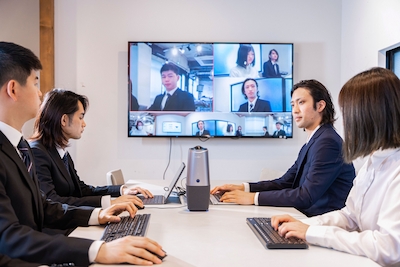
As hybrid work continues to evolve, many organizations now combine in-person and virtual meetings to balance face-to-face interaction with the convenience and scalability of remote communication.
Easier Coordination Across Different Work Styles
Modern teams no longer work from a single location or schedule.
Hybrid collaboration helps organizations coordinate:
- Remote employees
- Office-based teams
- Flexible work schedules
- Distributed departments
- Global teams across different time zones
Instead of requiring everyone to be physically present, teams can collaborate more efficiently while supporting different work environments and employee preferences.
Faster Communication and Decision-Making
One major advantage of hybrid collaboration is the ability to communicate and make decisions more quickly across locations.
Organizations can:
- Hold discussions without waiting for travel schedules
- Connect remote and in-office participants faster
- Speed up project discussions and approvals
- Reduce delays between departments and locations
This allows businesses to respond more quickly while keeping communication more consistent across teams.
More Natural Collaboration for Hybrid Teams
In-person meetings support stronger face-to-face interaction, while virtual meetings improve convenience and accessibility.
Combining both formats creates a more balanced collaboration experience by allowing:
- Face-to-face discussion for in-room participants
- Remote access for distributed employees and clients
- More flexible participation during meetings
- Better communication between office and remote teams
This approach helps organizations maintain personal interaction without limiting collaboration to a physical office environment.
Better Accessibility and Wider Participation
Hybrid meetings make communication more accessible for a larger group of participants.
Benefits include:
- Easier participation for remote employees
- Better access for clients and external partners
- Reduced travel requirements
- Greater inclusion for distributed teams
Participants from different cities or countries can join discussions without requiring everyone to be in the same conference room.
More Efficient Use of Office Space and Resources
Flexible meeting environments also help businesses use office resources more efficiently.
Organizations can:
- Reduce the need for large daily office attendance
- Optimize conference room usage
- Lower travel and operational expenses
- Support flexible workplace strategies
This creates a more scalable and cost-efficient collaboration environment for growing businesses.
Better Adaptability for Modern Work Environments
Modern businesses increasingly need communication systems that can adapt quickly to changing workplace conditions.
Blended meeting environments help organizations maintain collaboration during:
- Remote work transitions
- Distributed hiring and global expansion
- Travel limitations
- Flexible workplace scheduling
This flexibility allows businesses to continue collaborating efficiently without disrupting communication and teamwork.
Smarter Hybrid Collaboration Technology Improves Communication
Modern hybrid meetings increasingly rely on conferencing technology to improve communication quality and participant experience.
Businesses now use:
- AI-powered conferencing systems
- Smart speaker tracking
- High-quality microphones and cameras
- Shared collaboration tools
- Noise reduction technology
Solutions like the Coolpo AI Huddle PANA help improve communication between in-person and virtual meetings creating more balanced and engaging meeting experiences.
More Inclusive Participation for Remote and In-Office Teams
One challenge in hybrid work environments is ensuring remote employees feel equally involved during discussions.
Combining physical and virtual collaboration helps businesses create:
- More balanced participation
- Better communication access
- Stronger collaboration between remote and office teams
- More inclusive meeting experiences
This helps reduce the communication gap that often exists between physical and remote participants.
How Businesses Choose Between Meeting Formats
Many organizations no longer rely on a single meeting format for every discussion. Instead, businesses often choose between physical, virtual, or hybrid collaboration based on the type of communication needed.
For example:
- Strategic planning sessions may benefit from face-to-face interaction
- Quick updates and cross-location discussions may work better virtually
- Company-wide collaboration often uses hybrid meeting environments
Businesses also consider factors such as:
- Participant location
- Meeting size
- Collaboration requirements
- Scheduling flexibility
- Communication goals
Choosing the right meeting format helps organizations improve collaboration quality while making communication more efficient and accessible for different teams and work environments.
Conclusion
Hybrid meeting environments help businesses improve collaboration, communication speed, accessibility, and workplace flexibility while supporting both remote and in-office participation. As modern work environments continue evolving, organizations increasingly combine physical and virtual collaboration to create more adaptable, scalable, and inclusive communication systems.
Recent blogs





New Partnership Alert: Coolpo × CanTicket – Unlocking the Future of Remote Work Efficiency

Reliable
Innovation
Touch


