
What Are the Latest Trends in Hybrid Workplace Technology?
The biggest hybrid workplace technology trends in 2026 are AI-powered collaboration and workflows, a shift toward async systems over constant meetings, meeting equity-focused conferencing hardware, flexible hybrid cloud infrastructure, AI-enhanced devices, smart offices, and employee experience-first tech decisions. Together, these point to one theme: hybrid work is no longer treated as an exception to plan around, it's the baseline organizations are building systems for.
The latest trends in hybrid workplace technology in 2026 include AI-powered collaboration tools, smarter digital workflows, advanced meeting room systems, hybrid infrastructure, and employee-focused technology. These innovations are no longer just about enabling remote work. They are designed to improve productivity, create equal work experience, and support how teams actually operate in hybrid environments.
Below, we break down the key trends shaping how modern workplaces operate today.
1. AI-Powered Workflows and Collaboration
- AI is becoming a core layer of workplace technology.
- AI assistants for meeting summaries and task automation
- Smart scheduling and documentation tools
- AI integrated into chat and video platforms
AI is evolving from a tool into a support system that helps teams manage hybrid complexity more efficiently. Work is now shifting toward human + AI collaboration, where AI supports decision-making, coordination, and execution. This shift is already reshaping how much authority AI has in day-to-day work decisions, not just hybrid-specific ones, which is changing what the human role in the workplace looks like more broadly.
2. Smarter Digital Workflows (Less Meetings, More Systems)
Hybrid teams are moving away from constant meetings toward structured systems.
- Increased use of async tools like chat and documentation platforms
- Centralized knowledge hubs for better information access
- Workflow automation to reduce manual coordination
Teams now rely more on systems than real-time communication to stay aligned. This shift reduces meeting overload and allows work to happen across different schedules and time zones. Fewer, better meetings still need to run well when they do happen, which is often less about which software a team buys and more about fixing the disconnected tools already slowing everyone down.
3. Advanced Hybrid Meeting Technology (Focus on Meeting Equity)
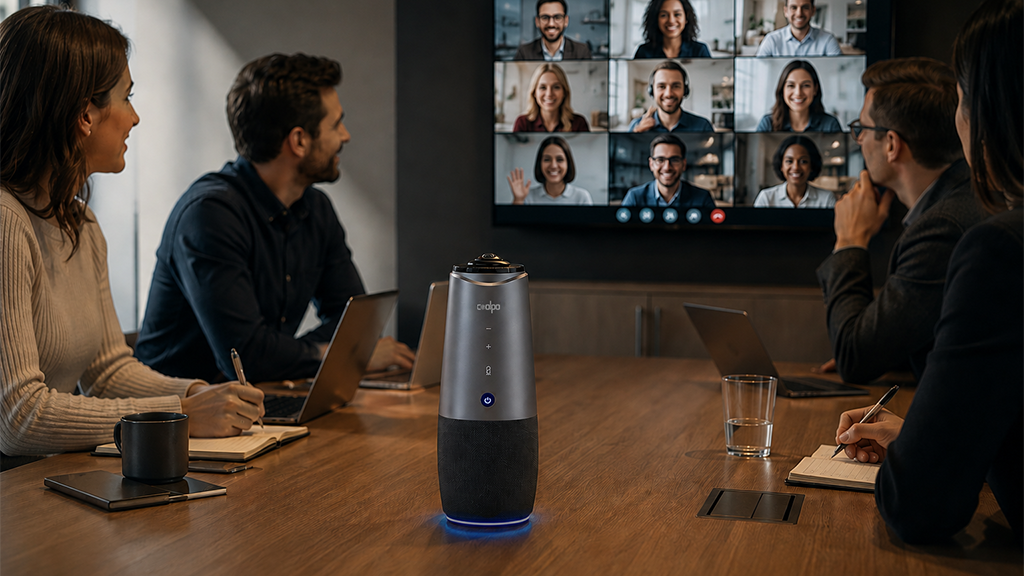
Meetings remain one of the biggest challenges in hybrid work, driving rapid innovation in meeting technology.
- 360° cameras and intelligent speaker tracking
- AI-powered framing and noise cancellation
- Real-time transcription and translation
- All-in-one conferencing systems for full-room coverage
The focus is shifting toward meeting equity, not just connectivity. The goal is to ensure remote participants feel just as present, heard, and engaged as those physically in the room.
In this space, solutions like Coolpo AI Huddle PANA represent the move toward simpler, all-in-one systems. With 360° video and audio coverage combined with AI tracking, these devices help create a more balanced and inclusive meeting experience. Even the best hardware still depends on the basics working, since a shaky connection or poor lighting setup undercuts meeting equity just as much as missing hardware does.
4. Hybrid Cloud + Flexible Infrastructure
Companies are moving beyond simple cloud setups toward more flexible systems.
- Combination of cloud and local (on-device) processing
- Improved performance and lower latency
- Better control over data privacy and security
Hybrid infrastructure is becoming essential for balancing performance, cost, and reliability. It allows organizations to adapt quickly while maintaining control over their systems and data.
5. AI-Enhanced Devices and Smart Hardware
Workplace devices are evolving to support smarter workflows.
- AI-powered laptops and edge devices
- Real-time transcription, translation, and automation
- Improved performance for multitasking and collaboration
Hardware is now designed to support productivity, not just basic tasks. These devices act as extensions of digital workflows, enabling faster and more efficient work.
6. Smart Offices and Connected Workspaces
Physical offices are becoming more adaptive and data-driven.
- Workspace sensors and occupancy tracking
- Smart room booking systems
- AI-controlled lighting, temperature, and energy
Offices are evolving into intelligent environments that respond to how people work. This improves space utilization while creating more comfortable and efficient workplaces.
7. Employee Experience-Focused Technology
Technology decisions are now driven by employee experience, not just cost.
- Tools that simplify workflows and reduce friction
- Platforms designed for usability and accessibility
- Technology that supports engagement and wellbeing
Employees now expect workplace technology to be simple, fast, and seamless. Organizations that prioritize experience see better adoption, satisfaction, and productivity.
8. Hybrid Work as the Default Model
Hybrid work is no longer a trend. It's the standard.
- Flexible work is now expected by employees
- Offices are redesigned for collaboration, not individual work
- Systems are built specifically for distributed teams
Hybrid is now the baseline, not an option. This shift is forcing companies to rethink how work is structured, measured, and supported.
What This Means for Businesses
To stay competitive, organizations need to:
- Invest in AI-driven tools and automation
- Improve meeting room setups and collaboration systems
- Build structured, async-friendly workflows
- Focus on employee experience and usability
- Adopt flexible infrastructure strategies
The goal is not just better tools, but a fully integrated hybrid work system. Companies that align technology with real workflows will see stronger efficiency, collaboration, and long-term adaptability.
Conclusion
Hybrid workplace technology in 2026 is focused on making work more intelligent, inclusive, and adaptable. With AI integration, smarter workflows, and improved meeting experiences, organizations are building systems that support both productivity and employee experience. Those that combine the right technology with intentional design will gain a clear advantage in how teams collaborate and perform.
Better meetings start with better gear. See how Coolpo AI Huddle Pana conferencing keeps remote and in-room teams perfectly clear.
1. What are the latest trends in hybrid workplace technology?
The biggest trends in 2026 are AI-powered collaboration tools, a shift toward async workflows over constant meetings, meeting equity-focused conferencing hardware, flexible hybrid cloud infrastructure, AI-enhanced devices, smart offices, and employee experience-first technology decisions.
2. What does "meeting equity" mean in hybrid workplace technology?
Meeting equity refers to making sure remote participants feel as present, heard, and engaged as people physically in the room, typically through 360° cameras, intelligent speaker tracking, and full-room audio coverage rather than a single laptop webcam and mic.
3. Is hybrid work still considered a trend in 2026?
Not really. Hybrid work has shifted from an emerging trend to the default operating model for most organizations, which is why the technology conversation has moved from "how do we enable remote work" to "how do we build systems around it."
4. Why are companies moving away from constant meetings toward async tools?
Constant real-time meetings struggle to accommodate different schedules and time zones. Async tools like shared documentation and centralized knowledge hubs let hybrid teams stay aligned without requiring everyone online at once.
5. What role does AI play in hybrid workplace technology?
AI now touches nearly every layer of hybrid work, from meeting summaries and scheduling to noise cancellation and real-time transcription, functioning less like a single tool and more like a support system that helps teams manage hybrid complexity.
Recent blogs


.webp)

Magical Zoom Meeting: Remote Workers Share Unique Places They've Logged In


Reliable
Innovation
Touch


