
What Benefits Do Hybrid Work Models and Workplace Environment Provide for Employees and Employers?
Hybrid work models and workplace environment provide benefits for both employees and employers by improving flexibility, work-life balance, productivity, collaboration, employee satisfaction, and workplace efficiency. In 2026, hybrid work is no longer viewed as a temporary arrangement but as a long-term workplace strategy that helps businesses support distributed teams, evolving employee expectations, and more adaptable ways of working.
As organizations continue balancing remote and in-office work, many companies now invest in hybrid workplace strategies that improve both employee experience and overall business performance.
Better Work-Life Balance for Employees
One of the biggest advantages of hybrid work models and workplace environment is improved work-life balance.
Hybrid work environments help employees:
- Reduce commuting time
- Gain more schedule flexibility
- Manage personal responsibilities more effectively
- Create healthier and more balanced daily routines
Employees can save hours previously spent commuting, allowing more time for focused work, family responsibilities, rest, and personal well-being. In 2026, workplace flexibility is increasingly viewed as a standard expectation rather than a temporary employee benefit.
Businesses that support healthier work-life balance often experience:
- Higher employee satisfaction
- Lower burnout rates
- Improved morale
- Better long-term retention
Greater Flexibility for Modern Work Styles
Modern employees no longer expect to work entirely from one location every day.
Hybrid work models and workplace environment now support:
- Remote work
- Office collaboration
- Flexible schedules
- Distributed teams
- Different productivity preferences
Many businesses allow employees to divide their time between focused remote work and collaborative in-office activities depending on the type of work being completed. This flexibility helps organizations support different working styles while creating more adaptable and employee-friendly workplace environments.
Improved Productivity and Smarter Workflows
Many organizations discover that hybrid work environments can improve productivity when supported by clear communication systems and modern collaboration tools.
Benefits may include:
- Fewer distractions during focused tasks
- More efficient virtual collaboration
- Better time management
- Flexible workflows
- Reduced meeting overload through async communication
In 2026, many hybrid teams now combine live meetings with cloud collaboration platforms, shared digital workspaces, and asynchronous updates to improve efficiency without relying on constant meetings throughout the day. Employees can often complete focused tasks more efficiently from remote environments while still participating in collaborative office discussions when necessary.
Better Employee Satisfaction and Retention
Workplace flexibility has become one of the most important factors influencing employee satisfaction and retention.
Hybrid work models and workplace environment help businesses:
- Improve employee experience
- Reduce burnout
- Increase retention
- Support employee well-being
- Create more attractive work environments for hiring
Flexible work arrangements are now considered a major competitive advantage in recruitment, especially for businesses supporting digital-first and distributed teams. Companies that offer adaptable work environments are often more successful at attracting and retaining skilled professionals in highly competitive industries.
Wider Access to Talent and Global Hiring
Hybrid workplace models allow organizations to recruit talent beyond a single office location.
Benefits for employers include:
- Access to a larger talent pool
- Easier hiring across different regions
- More diverse teams
- Greater workforce scalability
- Better support for global collaboration
Many companies in 2026 now build teams across multiple cities or countries while maintaining collaboration through hybrid communication systems and cloud-based workplace platforms. This flexibility helps businesses grow more efficiently while giving employees access to opportunities regardless of location.
More Efficient Workplace Operations
Hybrid work models and workplace environment can also improve operational efficiency for businesses.
Organizations may reduce:
- Office space requirements
- Travel expenses
- Daily operational costs
- Large-scale office resource usage
Rather than maintaining fully occupied office spaces every day, many companies redesign workplaces to focus more on collaboration, meetings, and team interaction instead of traditional fixed desk setups. This shift allows businesses to optimize office usage while creating more flexible workplace environments for employees.
Common Challenges of Hybrid Work Environments
While hybrid work offers many advantages, businesses still face several operational challenges.
Common hybrid workplace challenges include:
- Communication gaps between remote and in-office employees
- Meeting fatigue
- Uneven collaboration experiences
- Difficulty maintaining team engagement
- Coordination across multiple locations and schedules
As hybrid work evolves, organizations increasingly focus on improving communication systems and creating more inclusive collaboration experiences for distributed teams.
Stronger Collaboration Through Modern Hybrid Technology
Modern hybrid workplaces rely heavily on collaboration technology to connect remote and in-office employees more effectively.
Businesses now use:
- AI-powered conferencing systems
- Cloud collaboration platforms
- Shared digital workspaces
- AI meeting summaries and workflow tools
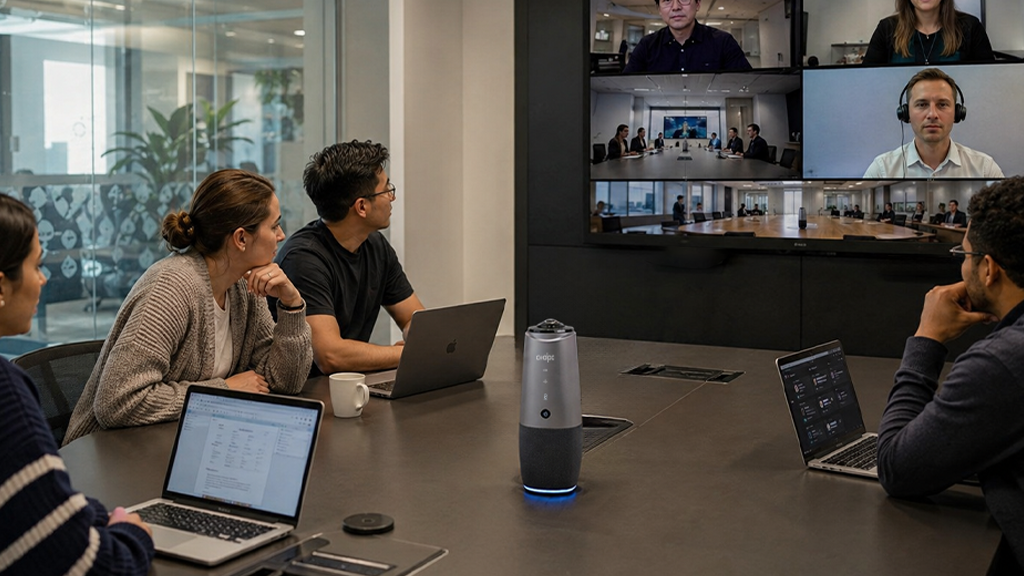
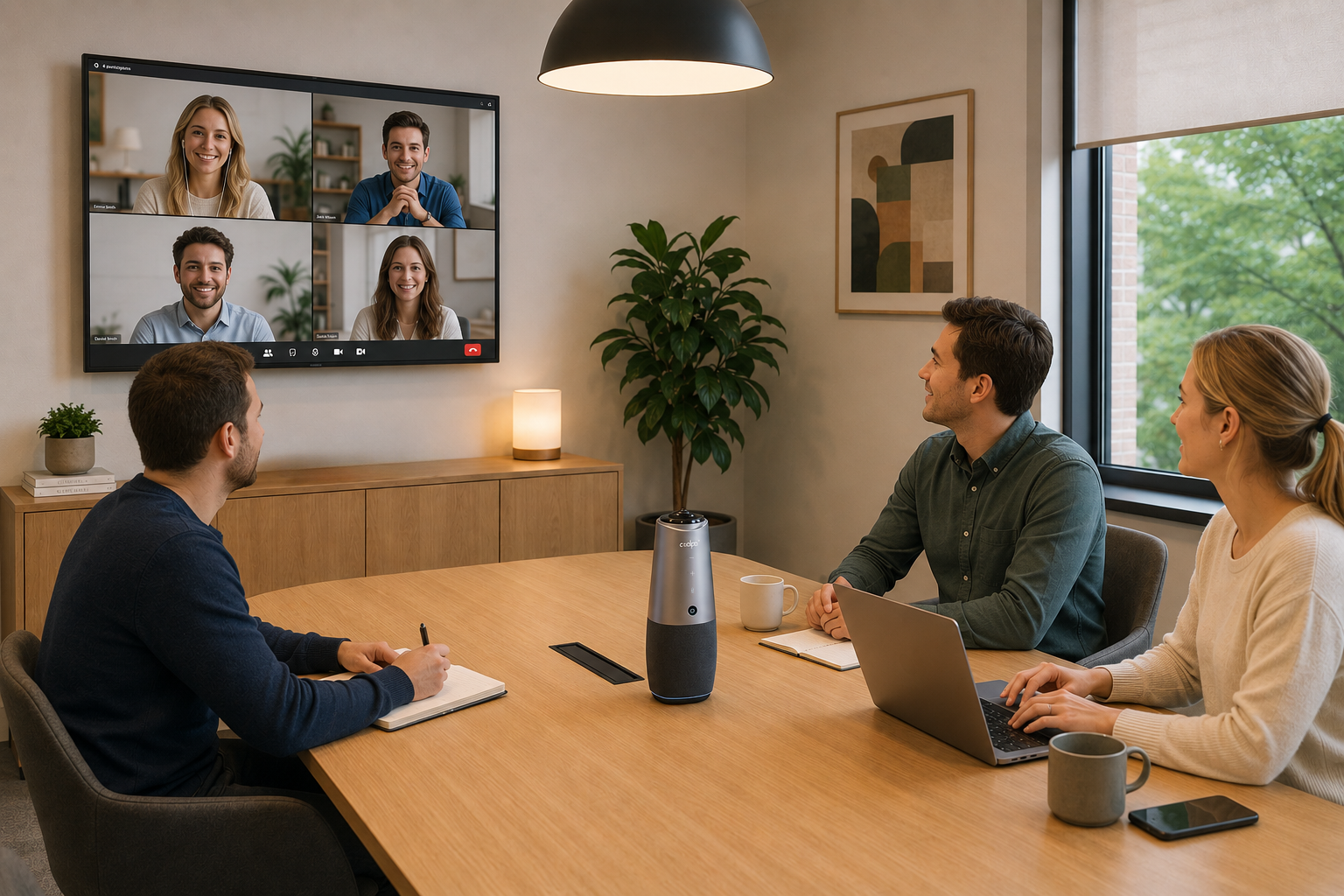
In many hybrid meeting environments, organizations also use conferencing systems such as Coolpo AI Huddle PANA to help remote and in-office participants communicate more naturally during discussions and collaborative meetings. As hybrid work continues evolving in 2026, businesses increasingly focus on creating meeting experiences where remote participants feel more included rather than separated from in-room conversations.
More Adaptable and Future-Ready Work Environments
Hybrid work models help organizations adapt more easily to changing workplace expectations and business conditions.
Businesses can:
- Support remote and in-office employees simultaneously
- Respond more quickly to operational changes
- Improve business continuity
- Build scalable workplace systems
- Adapt to evolving workforce expectations
As workplace environments continue evolving in 2026, companies increasingly prioritize flexibility, employee experience, collaboration technology, and operational adaptability instead of relying entirely on traditional office structures.
Conclusion
Hybrid Work Models and Workplace Environment provide important benefits for both employees and employers through greater flexibility, improved work-life balance, smarter workflows, stronger employee satisfaction, and more efficient workplace operations. As hybrid work continues evolving in 2026, organizations increasingly focus on building adaptable work environments that balance collaboration, technology, employee experience, and operational efficiency for long-term business success.
Recent blogs

.png)

Reliable
Innovation
Touch


